Customer preferences
Fluid AI Voice AI: A spoken conversation lets callers explain a request naturally. IVR: A familiar keypad menu gives callers fixed choices.
Resolve customer requests through natural voice conversations connected to your approved banking systems. Built for enterprise teams that need helpful service with clear controls.
Voice workflows, system lookups and human handoff, configured for your organization.
An illustrative English banking support journey, from the first ring to a clear next step.
An English voice agent answers the call.
“Hi, thanks for calling. How can I help with your account today?”
Verification steps follow the approved workflow.
A configured connection can retrieve information from an approved source.
Where enabled, caller-confirmed actions follow the configured workflow.
Share the next step or transfer to a person when the workflow calls for it.
Illustrative sequence and timestamps, not a recording or measured call timing. Verification, system access and actions depend on the agreed workflow and deployment.
Explore both Fluid AI demonstrations. Choose a video to start playback.
Fluid AI Voice AI: A spoken conversation lets callers explain a request naturally. IVR: A familiar keypad menu gives callers fixed choices.
Fluid AI Voice AI: Can support multi-step requests when a banking workflow is configured. IVR: Best suited to predictable routing and straightforward choices.
Fluid AI Voice AI: Uses approved banking connections and actions configured for the deployment. IVR: Often routes through existing phone systems; deeper actions depend on setup.
Fluid AI Voice AI: Needs voice workflow design, integrations and operational controls. IVR: A practical fit when menu-based routing meets the service need.
Fluid AI Voice AI: A responsive voice exchange with configured human handoff. IVR: Consistency and quick routing through a known menu structure.

See how banking teams are replacing rigid phone menus with voice experiences that can understand customer requests and connect to approved workflows.
Read articleReported outcomes from one large North American bank. Results are specific to that published case.
The published case describes a shift in team size, operating costs and response handling. These are that bank's reported results, not a forecast.
“5× more productive. 20 phone processes now answered by AI. Zero compromise on customer experience.”
Published case details from a large North American bank.
Published case details are not a forecast or guarantee of results for another organization.
Connect conversations to approved core banking, card, payment and customer systems. The agent can look up information or take actions only where integrations, permissions and policies allow.
System names are integration examples, not endorsements or guarantees of availability. Connections and supported actions are confirmed during solution design.
Review deployment boundaries, access, retention and audit controls against your policies and agreed architecture.
Deploy inside your data center
Your AWS, Azure or GCP environment
For sensitive workloads
CERTIFICATIONS & DEPLOYMENT OPTIONS


Certifications are cited in Fluid AI banking materials. DPDP wording denotes alignment, not certification. The on-premise badge is a deployment option.
Auditable recordsHash-chained audit logs, 7-year retention and SIEM integration can be scoped to the agreed deployment.
First channel planningInitial channel rollout is typically 8 to 12 weeks from kickoff. Timelines vary with integrations, environment and scope.
Privacy, data residency, recording encryption, retention and model-training settings are subject to the agreed architecture, policies and configuration.
Fluid AI's enterprise conversational AI helps banks and organizations handle customer requests through AI voice agents and connected support workflows. Fluid AI reports a production deployment at a large North American bank. Agents can support authentication, account inquiries, transactions and resolution through configured workflows and approved integrations.
Fluid AI's voice agent is deployed in English for a large North American bank. Specific dialect coverage is configured per deployment and determined during evaluation.
Fluid AI supports native integrations with Finacle, FIS, Temenos T24 and custom core banking systems. Agents can query live data through secure APIs during the call, subject to the permissions and connections configured for the deployment.
Fluid AI supports on-premise deployment inside your data center and air-gapped deployment options. Hash-chained audit logs, 7-year retention and SIEM integration are scoped to the agreed architecture, policies and deployment configuration.
Deployments are designed to align with banking regulatory requirements, using deployment controls, audit logs and retention policies agreed for the environment. Fluid AI holds SOC 2 Type II and ISO 27001:2022 certifications. Regulatory alignment must be reviewed for your specific deployment and jurisdiction.
Plan around 12 weeks for a standard initial deployment. Fluid AI's banking support materials describe an 8 to 12 week initial-channel rollout; timing depends on integrations, channels, languages and review requirements in scope.
More on voice AI, customer service and banking workflows.
A voice AI agent does more than transcribe and respond. Here is how Fluid AI builds this for banking and why it matters right now.
Read article
Banks swap phone menus for smart Voice AI that serves and sells fast.
Read article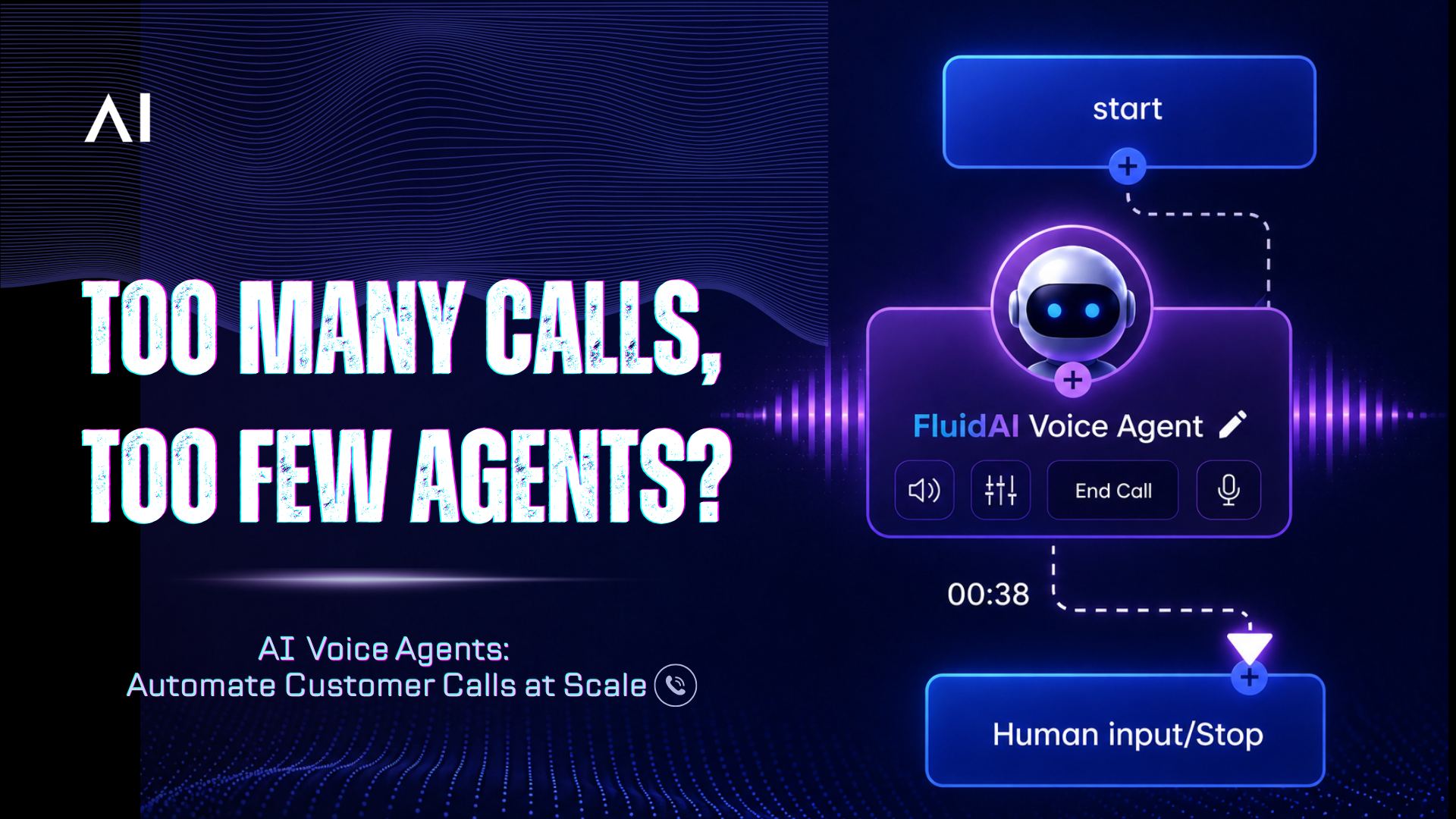
How AI voice agents handle routine calls so human teams can focus on the conversations that need them.
Read articleTalk to our team about customer workflows, approved system connections and the right operating model for your organization.