AI in Real Estate: Enhancing Lead Generation and Customer Engagement Across Channels

TL;DR
Real estate runs on speed. The agent who replies first usually wins the deal, and most leads go cold waiting for a callback.
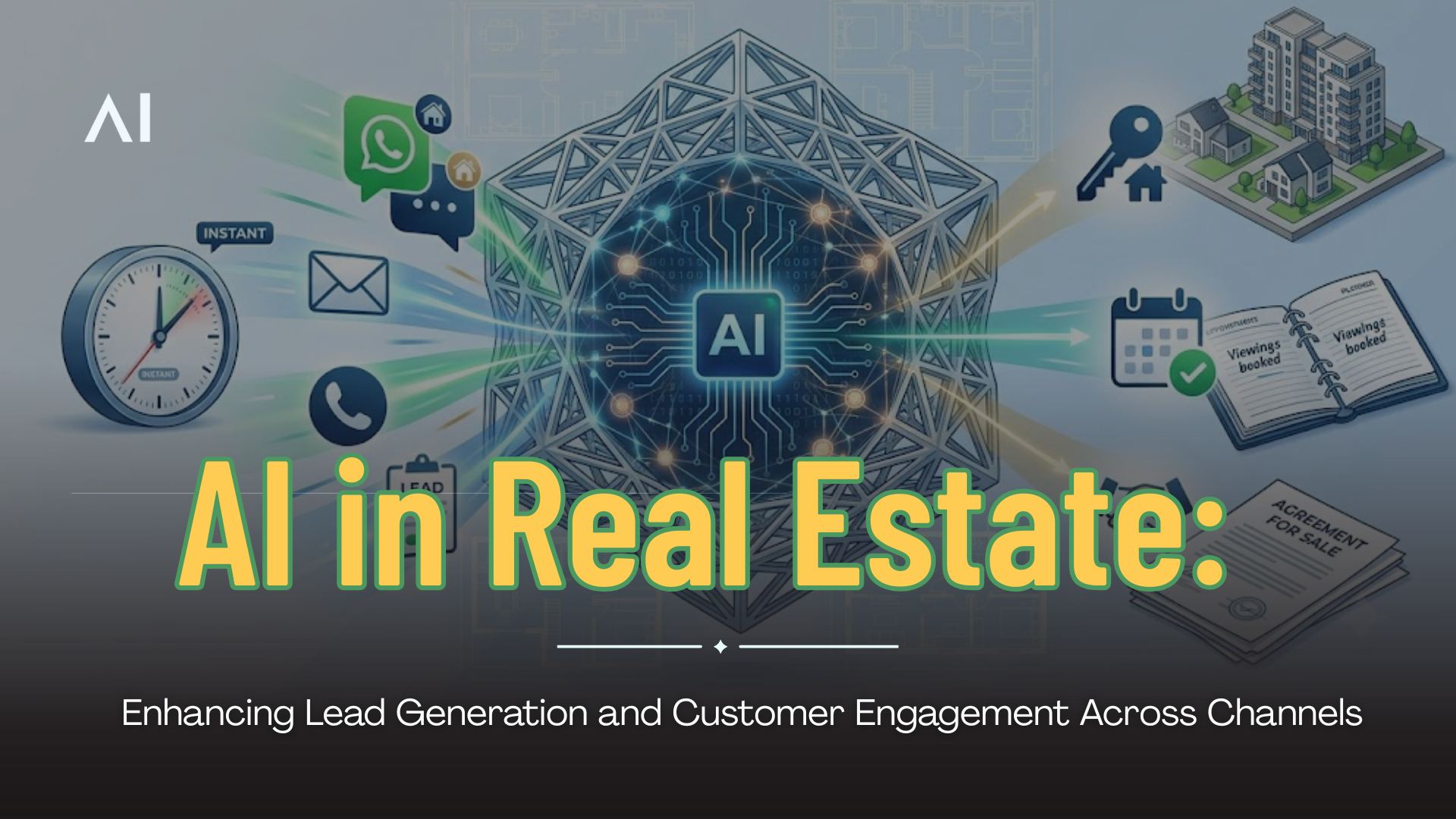
AI in real estate fixes this by engaging every lead instantly across WhatsApp, email, and voice, qualifying them, answering questions, and booking site visits automatically.
The payoff is in real estate lead generation: no inquiry ignored, no lead lost to slow follow-up, and human agents freed to close instead of chase.
The best systems work across every channel at once, so a buyer gets the same smart response whether they message on WhatsApp or call.
The real estate problem: speed kills deals, or wins them
In real estate, the first responder usually wins. A buyer inquires on three listings at once, and whichever agent replies first gets the conversation. The rest are talking to a dead lead.
The problem is that inquiries don't arrive politely at 11 a.m. They come at midnight, on weekends, across WhatsApp, email, portals, and phone, far faster than any team can answer them by hand. So leads sit. A form fills out on Saturday and gets a call on Monday, by which point the buyer has already toured two other properties. Every hour of delay is a deal quietly leaking away.
This is where AI in real estate earns its place, not as a gimmick, but as the thing that makes sure no lead ever waits.
What AI-powered customer engagement looks like
Real estate AI engages every lead the moment it arrives, on whatever channel it arrives, and carries the conversation until a human needs to step in.
WhatsApp. Most buyers live on WhatsApp. An AI agent answers instantly, shares property details, photos, and pricing, and qualifies the buyer through natural conversation, not a rigid form.
Email. Inquiries and follow-ups are handled automatically, with personalized responses and nurture sequences that keep warm leads warm instead of forgotten.
Voice. An AI voice agent answers calls around the clock, responds to questions about a listing, and books site visits, so a missed call is never a missed buyer.
The point isn't any single channel. It's that a real estate chatbot or voice agent gives the same instant, intelligent response everywhere, so the buyer's experience is seamless whether they type or call.
From inquiry to site visit, automatically
The value of ai for real estate agents isn't just answering, it's moving the deal forward. A well-built agent:
Qualifies the lead, budget, location, timeline, intent, so agents spend time only on serious buyers.
Answers property questions instantly, from pricing and availability to amenities and documentation.
Books site visits straight into the agent's calendar, turning interest into a scheduled meeting without back-and-forth.
Follows up automatically on leads that go quiet, the nurture work agents rarely have time to do.
Hands off to a human with full context the moment the conversation needs a person.
This is real estate automation where it actually matters: the top of the funnel, where speed and consistency decide whether an inquiry becomes a buyer.
Why this transforms real estate lead generation
Real estate lead generation is expensive. Agencies pay heavily for every lead, and yet most of those hard-won leads are wasted, not because the marketing failed, but because the follow-up did. A lead you paid for and never called back is money burned twice.
AI closes that leak. Every lead gets an instant, qualified response, so the leads you already pay for actually convert. The ROI isn't "more leads," it's finally using the ones you have.
Speed is the whole game
Real estate is one of the few businesses where response time alone can win or lose the deal. A buyer rarely inquires on just one property, they send the same message to several, then go with whoever answers first and best. Manual follow-up can't win that race, because inquiries land at all hours across every channel. AI removes the delay completely: every lead gets a real, useful response in seconds, day or night, so you're always the agent who replied first, not the one leaving a voicemail after the buyer already booked a tour elsewhere.
Works for developers, brokerages, and solo agents
The advantage scales up and down. A large developer uses AI to handle inquiry volume across hundreds of listings and route serious buyers to the right sales team. A brokerage gives every agent an always-on assistant that qualifies and books site visits while they're out showing a property. An independent agent finally catches the midnight WhatsApp inquiry instead of losing it. The volume changes, but the edge is identical: never being the slow one, and never letting a paid-for lead sit unanswered.
The AI answers, the agent closes
Property is a high-trust, high-value purchase, and buyers can tell when they're being handled by a rigid bot. The goal of AI here isn't to hide the human, it's to make sure the human shows up at the right moment, fully briefed. Good AI engagement feels like a responsive concierge that answers instantly, then connects the buyer to a real agent the moment the conversation turns serious, with the full context already gathered. It also keeps a clean record of every interaction, which matters as data and privacy expectations tighten around property transactions. Done right, AI doesn't make real estate feel less personal. It makes sure the personal moment, the agent and the buyer, actually happens instead of being lost to a missed message.
What matters when choosing a real estate AI
Not every tool is built the same. The ones that actually move the needle share a few traits:
True multichannel, one system across WhatsApp, email, and voice, not three disconnected bots.
Real conversation, not scripts, buyers can tell the difference, and rigid bots kill trust.
CRM integration, so every lead, conversation, and booking flows into the systems agents already use.
Language and accent coverage, buyers should be able to talk in their own language and be understood.
Clean human handoff, the AI should know when to bring in an agent, and hand over full context when it does.
Frequently asked questions
How is AI used in real estate?
AI engages and qualifies leads across WhatsApp, email, and voice, answers property questions instantly, books site visits, and follows up automatically, so no inquiry goes cold and agents focus on closing.
What is a real estate chatbot?
An AI agent that talks to buyers in natural language, usually on WhatsApp or a website, answering questions, qualifying interest, and scheduling visits without a human on every message.
Can AI improve real estate lead generation?
Yes, mainly by converting the leads you already have. Instant, 24/7 qualified responses stop leads going cold, which raises conversion from the same marketing spend.
Does AI replace real estate agents?
No. It handles the instant response, qualification, and follow-up at the top of the funnel, so agents spend their time on serious buyers and closing deals, the work that needs a human.
Which channels can real estate AI cover?
The strongest systems work across WhatsApp, email, and voice at once, giving buyers the same intelligent response on whatever channel they choose.
Where to start?
Start where you're losing the most leads today, usually after-hours WhatsApp inquiries or missed calls. Put an AI agent on that one channel, prove it converts leads you were losing, then expand across every channel and into follow-up and nurture.
Want to stop losing leads to slow follow-up? Book a demo and we'll show AI-powered engagement on your channels.
_1790254083168-CB8e8KXC.png)