Browser Agents vs Traditional AI Tools: Why the Web Is Becoming the Next Operating System

TL;DR
TL;DR
- Traditional AI tools live within apps; browser agents live directly on the web.
- They can observe, navigate, and act across sites autonomously.
- The browser is rapidly evolving into the primary operating system for AI interaction.
- Early examples include OpenAI and Perplexity integrating autonomous browsing capabilities.
- The next major AI evolution is not just smarter models—but AI that can operate across the web itself.
The Old Paradigm: Intelligent but Isolated
For all their sophistication, most AI tools today remain confined within their own environments.
They process language exceptionally well but lack the ability to act.
Browser agents change this dynamic. Instead of existing within a controlled interface, they inhabit the browser itself—where actual digital work happens. They can open tabs, read information, interact with forms, and make decisions based on what they see.
In effect, they extend AI’s intelligence into the operational layer of the web, bridging the gap between understanding and execution. For more on AI agents that operate autonomously across tasks, check out LLM-powered AI Agents.
From Passive Assistance to Active Execution
Traditional AI systems are reactive. They wait for input, process it, and return an answer.
Browser agents are proactive. They can take a goal and determine how to achieve it by interacting directly with online environments.
Imagine specifying: Find three verified suppliers for sustainable packaging and email them.
A browser agent would search, compare, and execute the outreach—entirely within your browser environment.
This shift from response to action represents a fundamental leap. Early implementations from OpenAI’s ChatGPT with browsing and Perplexity’s real-time exploration already hint at what’s coming next: agents that don’t just interpret the internet—they operate within it.
Read more about AI agents as digital colleagues.
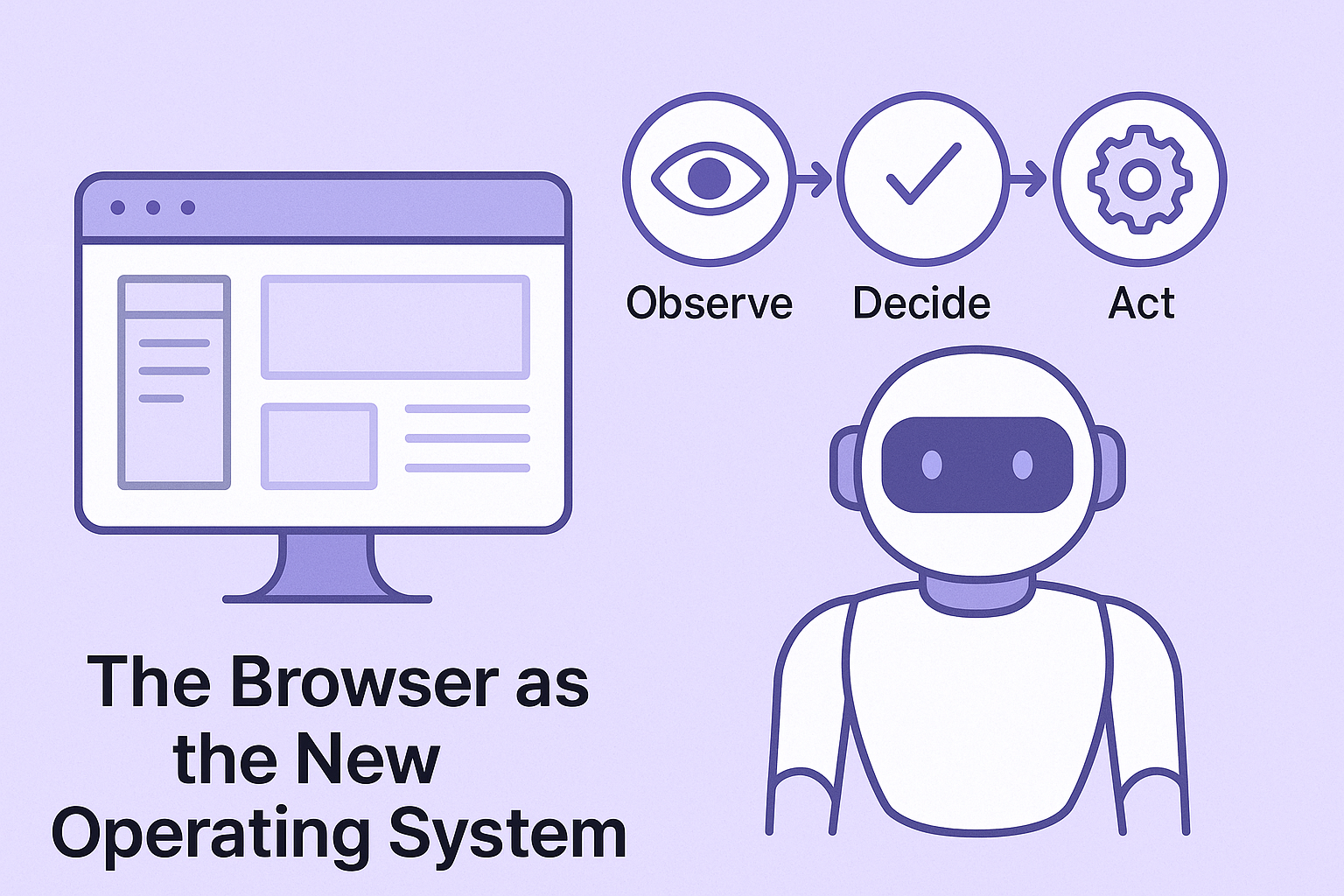
The Browser as the New Operating System
Almost every modern workflow now runs in a browser—communication, documentation, analytics, finance, and design.
As such, it is becoming the logical home for AI.
Browser agents can navigate multiple applications seamlessly, drawing insights from one tab and applying them in another. This makes the browser a unifying platform—an environment where AI can connect disparate systems without complex integration work.
The implication is profound: the browser is evolving from a passive viewing interface into an active computational layer. You can see how AI workflows integrate across platforms like website chatbots to further streamline operations.
The Core Advantage: Autonomy
What sets browser agents apart is autonomy.
They can:
- Observe page elements and understand on-screen content.
- Decide the most efficient action path.
- Execute operations such as filling forms, submitting data, or summarizing reports.
This three-step cycle—observe, decide, act—transforms AI from a question-answer system into an operational collaborator. It allows tasks that once required human supervision to be completed end-to-end, with precision and consistency. Learn more about the Fluid AI platform overview to see how these capabilities are structured.
Why Browser Agents Are Game-Changers
| Feature | Traditional AI Tools | Browser Agents |
|---|---|---|
| Location | Separate apps or extensions | Directly inside the browser |
| Interaction Style | Reactive, needs prompts | Proactive, anticipates user needs |
| Context Awareness | Limited to app data | Multi-tab, real-time workflow aware |
| Workflow Execution | One-off, user-triggered | Continuous, autonomous task management |
The big idea: Browser agents turn browsing into action, bridging gaps between research, automation, and productivity.
Redefining Trust and Security
As agents begin to act within browsers, trust becomes the defining factor.
The ability to click, submit, and access data introduces new questions:
- What boundaries should an agent have?
- Which pages or accounts should it access?
- How can its actions remain auditable and reversible?
Security models will need to evolve to meet this reality. Agent sandboxing, granular permission controls, and standardized authentication protocols—similar to OAuth—will be critical to ensure safe and verifiable operations.
The New Software Layer: Agents, Not Apps
Browser agents are quietly reshaping how we think about software. Instead of downloading full-scale applications, users may soon install specialized agents that perform specific roles directly within their browser.
A few examples:
- Monitoring competitor websites and summarizing changes.
- Compiling daily performance reports across multiple SaaS platforms.
- Reviewing compliance data and flagging anomalies.
These agents are modular, lightweight, and context-aware. They do not replace existing systems; they orchestrate them. For developers, this opens an entirely new layer of opportunity—building agents as capabilities rather than products.
Enterprise Transformation
In enterprise environments, the potential impact is enormous.
A browser agent embedded in a corporate setup could access internal dashboards, customer management tools, or financial systems—executing queries and compiling insights without the need for human navigation.
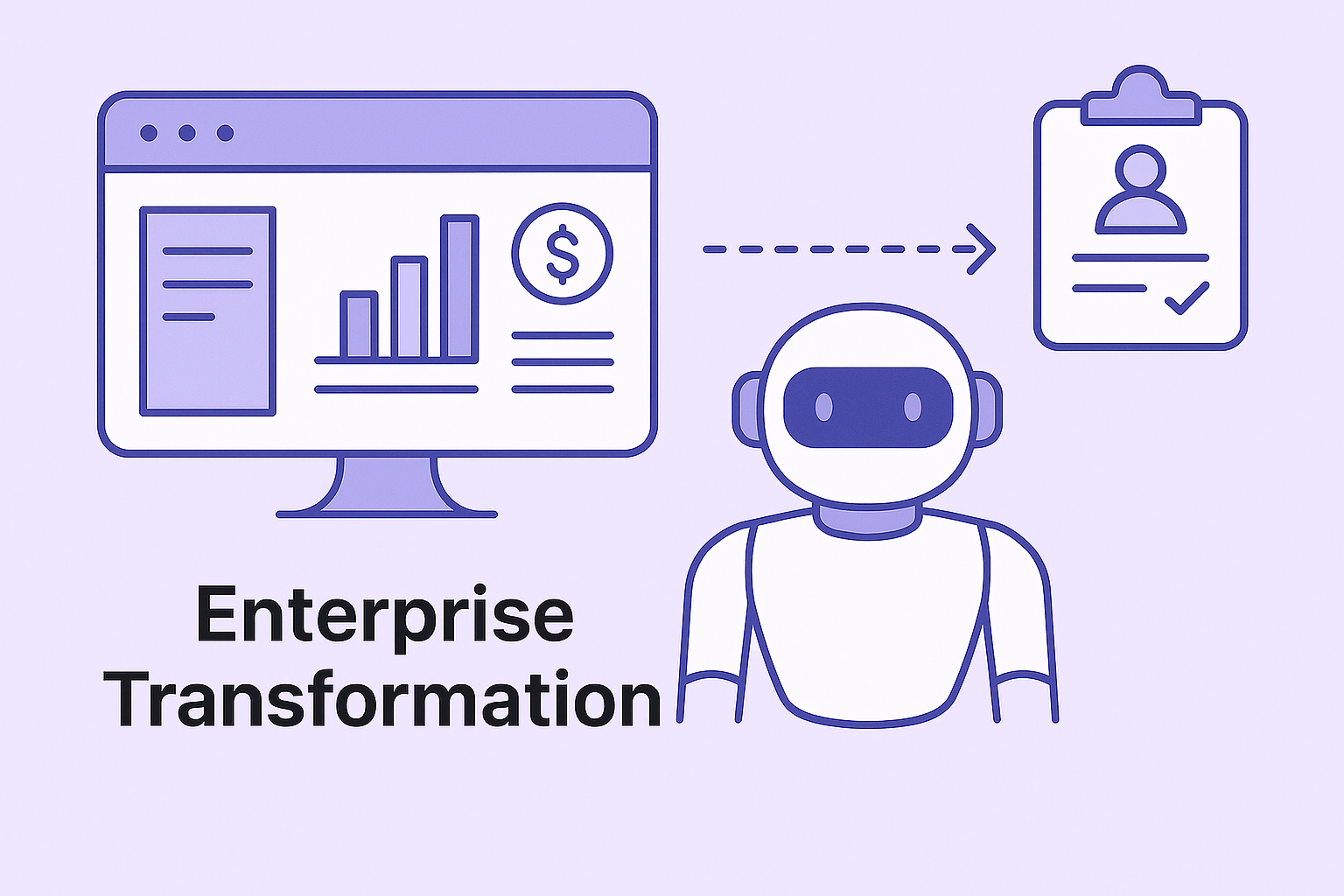
For example, a compliance officer could request: Identify KYC records pending review and generate a summary report.
The agent would perform the search, consolidate findings, and present the results.
This approach bypasses the need for heavy integrations, making legacy systems immediately compatible with intelligent automation. It also keeps operations transparent, since every action occurs in the browser layer—the same interface already governed by enterprise access policies.
The Strategic Shift in the Browser Landscape
As AI moves closer to the web layer, control over the browser itself becomes strategic.
Companies such as OpenAI, Anthropic, and Perplexity are already experimenting with this direction—embedding autonomous capabilities within the browsing process.
The competitive dynamic may soon resemble the operating system wars of the past, but this time, the contest is for control over the browser agent layer. Whoever defines this interaction standard will effectively control how humans and AI collaborate online.
The Evolution of Human–AI Collaboration
Browser agents blur the line between user and system. They inhabit the same environment as the human operator, observing patterns, learning preferences, and optimizing workflows in real time.
Rather than replacing users, they augment them—handling routine navigation while humans focus on higher-level reasoning and decision-making. Over time, this will redefine digital productivity: not separate tools for humans and AI, but a shared workspace of continuous collaboration.
The Next Operating System Won’t Be Installed
The future of computing will not arrive as another app or device. It will emerge through the browser.
As browser agents mature, the web itself will behave like an intelligent operating system—aware, responsive, and adaptive to user intent.
You will describe an outcome, and the system will determine how to achieve it across your connected applications.
In that sense, browser agents represent the natural culmination of AI evolution: from text models, to assistants, to fully operational digital counterparts.
Conclusion
Traditional AI tools expanded how we access knowledge.
Browser agents are expanding how we act on it.
They turn the internet into an executable environment, merging intelligence with capability. For organizations and individuals alike, the browser is no longer a passive window to information—it is becoming the command center for autonomous AI operations.
The next generation of productivity will not be defined by more applications or larger models, but by this simple truth:
AI will live where we work—inside the browser.