Agentic AI in the Middle East: From Pilots to Production Use Cases

TL;DR
While 66% of consumers use generative AI regularly, only 5–10% of enterprises report deriving significant value from it, creating a stark enterprise value gap. Shifting from generative AI to agentic systems can bridge this divide.
This blog summarizes insights from a webinar tailored to the Middle East market, highlighting practical adoption, deployment patterns, architectural best practices, and real‑world enterprise use cases across banking, telecom, and regulated sectors.
Watch the full webinar here: Agentic AI for the Middle East
Why Agentic AI Matters Now in the Middle East
The move from generative AI to agentic AI is more than hype — it reflects a shift in enterprise expectations.
“Most pilots fail because they stop at generation. What enterprises need is orchestration — the ability to act, trigger tools, follow rules, and produce outcomes.”
– Raghav Aggarwal, CEO, Fluid AI
Generative AI largely excels at unstructured content, such as text, video, and image creation. But enterprises need systems that act, not just generate. Agentic AI empowers workflows that orchestrate tools, structured data, compliance logic, and real business actions.
In a region like the Middle East, where regulatory constraints, customer expectations, and data sovereignty concerns are paramount, this difference matters deeply for adoption and success.
Why Many AI Pilots Never Deliver Value
A persistent problem in enterprise AI adoption is that pilots often fail to reach production. While consumers report significant benefit, enterprises lag because:
- Pilots focus on proof of concept, not production readiness
- Use cases are chosen based on enthusiasm, not feasibility
- Teams overindex on business value without equal attention to technical feasibility
To address this, the webinar introduced a simple decision pyramid that maps business value vs feasibility. The sweet spot is where both are high — these become the “likely wins” that enterprises should prioritize first.
This approach parallels how we describe aligning pilots to outcomes in our piece on why most AI implementations fail, which discusses strategy misalignment and organizational inertia.
A Strategic Framework for Evaluating AI Use Cases
Based on the pyramid shared in the webinar:
- Likely Wins
High business value, high feasibility — start here.
Examples include customer onboarding automation, email support automation, and helpdesk agents. - Calculated Risks
High value, lower feasibility — tackle once you have early success.
Examples include multi‑agent KYC orchestration or predictive customer lifecycle assistants. - Marginal Gains
High feasibility, lower business value — useful for building rhythm and confidence.
Quick wins like smart FAQ agents or email triage bots serve this group. - Low Value / Low Feasibility
Avoid until later or only if exceptional value exists.
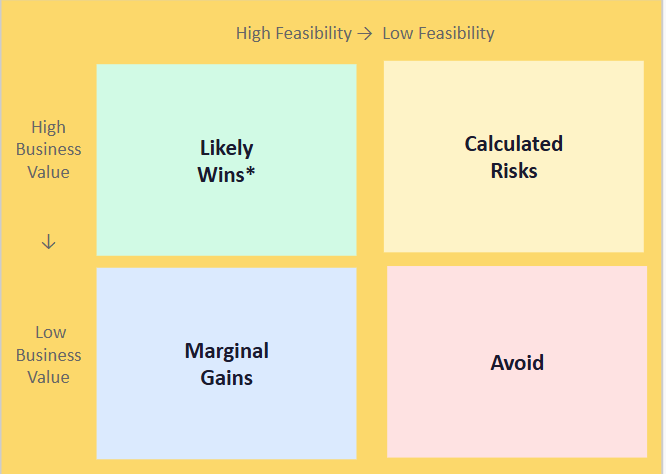
This prioritization helps teams avoid the trap of “big bets before basics,” a mistake seen in many markets.
Reimagining Enterprise AI Architectures
One of the core themes of the webinar was how enterprises must rethink traditional architecture when adopting agentic AI. The analogy used — building iteratively like a series of scaled prototypes rather than a grand design — is powerful.
Rather than a five‑year, monolithic plan, winning organizations:
- Iterate quickly
- Build modular agent blocks
- Launch subsystems in 30–60 days
- Learn, refine, and expand
This approach reflects modern enterprise practices we describe in AI Deployment Models Compared where hybrid, cloud, and on‑prem models are evaluated not as endpoints but as composable pieces of a larger architecture.
Agentic AI in Action: Customer Experience Use Cases
1. Customer Onboarding
Traditional onboarding is slow, manual, and document intensive. Agentic AI changes this by:
- Accepting free‑form user responses
- Understanding uploaded documents (passports, IDs) without strict templates
- Extracting structured data automatically
- Validating and escalating only when necessary
This replaces rigid flows with intuitive, conversational onboarding. It also supports hybrid / on‑prem deployment for data sovereignty — a key Middle Eastern concern.
2. Multi‑Channel Support: Email, Chat, WhatsApp, Voice
Enterprises today struggle with fragmented support, training bottlenecks, and inconsistent delivery across channels.
Agentic AI agents can:
- Manage email support, resolving up to 70–90% of tickets with follow‑ups and multi‑turn dialogues
- Drive chat interactions that remember context across sessions
- Operate over WhatsApp, where adoption is high in the region
- Handle voice support, seamlessly understanding interruptible speech and contextual switches
This capability directly improves customer satisfaction and operational efficiency and goes far beyond traditional bots with rigid decision trees.
Internal Enterprise Agents: Operations, Compliance & Support
Agentic AI isn’t just customer‑facing. Internal use cases are equally powerful:
- HR Assistants — employees get fast answers to policy questions, HR queries, and onboarding guidance
- IT Help Desk Agents — automated password resets, device provisioning, and troubleshooting
- RAG‑powered Knowledge Workers — employees can ask natural questions and get accurate, grounded answers from internal documents without hallucination
This aligns with broader trends in enterprise AI observability and internal productivity tools, where measuring usage and governance is as important as deployment.
Security, Sovereignty & Regulatory Readiness
In the Middle East, data governance and sovereignty are not optional. The webinar emphasized two dominant models:
1. Sovereign On‑Prem Deployments
Enterprises keep all components — agents, models, and knowledge bases — within private infrastructure, mitigating data residency concerns.
2. Hybrid Deployments
Certain compute‑intensive layers (like LLM engines) may reside in secure public clouds, while sensitive logic and data stay on‑prem. This balance allows scalability without jeopardizing compliance.
This hybrid thinking is consistent with how modern enterprises think about deployment patterns, as discussed in blogs such as Is Hybrid Cloud the Future of Generative AI in Banking?
Scaling Safely Across the Organization
The webinar addressed the importance of expectation management. Real adoption rarely follows a straight upward graph. Instead, enterprises often experience:
- An initial dip (adoption inertia)
- A plateau as teams learn and incorporate agents
- A growth curve as use cases mature and cultural buy‑in grows
Teams should educate stakeholders on this J‑curve, not the straight‑line hype cycle.
This insight dovetails with the idea that enterprise AI success isn’t just about technology, but culture and change management — the very reason many pilots fail.
Operational Use Cases: Collections, Sales & Data Querying
Beyond support, agentic AI is now demonstrating value in:
- Collections Agents that negotiate, record promises, and follow up proactively
- Sales Agents that generate proposals, search RFPs, and assist with deal qualification
- Data Conversational Agents that answer analytic questions without code
These are practical, revenue‑impacting applications that shift AI from a cost center to a strategic asset.
Choosing Build vs Buy (Middle East Perspective)
When organizations debate build vs buy, the webinar offered a grounded view:
- Build is viable if internal tech talent exists and long‑term differentiation is strategic
- Buy accelerates delivery, reduces risk, and allows focus on business impact
- Hybrid solves for both — use commercial platforms for core capabilities and build custom logic where needed
This balanced perspective mirrors what many enterprise leaders recommend today for AI strategy maturity.
Future Outlook: Agent‑to‑Agent Commerce & Customer Experience
One of the most forward‑looking parts of the webinar was the concept of agent‑to‑agent communication, where a customer’s AI agent interacts with an enterprise agent on their behalf — leading to autonomous commerce, negotiation, and personalized service.
With billions of weekly AI interactions globally, this future isn’t far off. Enterprises that build platforms now will be ready as AI transforms not just service, but commerce itself.
Conclusion: From Strategy to Scale
Agentic AI isn’t just the next wave of automation — it’s an enterprise operating paradigm. For Middle Eastern organizations in banking, telecom, insurance, and regulated sectors, success means:
- Choosing the right early use cases based on feasibility and value
- Deploying quickly with iterative architecture
- Balancing security and compliance with agility
- Educating stakeholders on realistic adoption curves
- Scaling use cases across customer support, internal workflows, and operational automation
With these principles, enterprises can move past pilots and start generating measurable ROI — not next year, but now.
_1790254083168-CB8e8KXC.png)